
Suggested tools for you
Quick Trust Line
- Tools reviewed
- 7
- Last checked
- October 29, 2026
- Reviewed by
- top100.ai software rankings editor
- What we checked
- Our rankings combine feature depth, audience fit, and market signals, but readers should always verify live pricing with the vendor.
Retail security can mean protecting stores, transactions, customer data, or the health of an online storefront. This comparison examines 7 tools that surfaced for top retail security solutions, but there is an important caveat: the products below mostly support adjacent ecommerce, sales, customer-reputation, and product-content workflows rather than physical loss prevention or dedicated cybersecurity. Use the rankings to identify potentially useful retail operations tools, not as a substitute for evaluating camera systems, fraud prevention, endpoint protection, or access control.
Start here
For recurring payments and subscription operations: Start with Antom, the highest-ranked option here. It automates billing lifecycle tasks, but it is not a dedicated security suite.
For ecommerce research and automation: Look at Nexscope or Zinc, while checking availability and usage costs before building a workflow around either one.
For store-floor or cyber defense: This list is not a direct shortlist. The top ai security solutions for retail should be assessed for specific needs such as video surveillance, access control, payment fraud, and network protection.
At-a-glance leaderboard
| Rank | Tool | Score | Best for | Monthly visits | Starting price |
|---|---|---|---|---|---|
| #1 | Antom | 90/100 | SaaS businesses managing subscriptions | 1.8M | Check vendor pricing |
| #2 | Nexscope | 90/100 | Ecommerce sellers researching products and markets | 48.2K | Free trial: free |
| #3 | Zinc | 89/100 | Developers automating commerce operations | 8.7K | $1 per successful order |
| #4 | RightResponse AI | 89/100 | Small businesses managing reviews | 12.0K | $10/location/month, pay as you go |
| #5 | SalesTable AI | 88/100 | Sales leaders coaching teams | 213 | Check vendor pricing |
| #6 | RemoveZero | 86/100 | Ecommerce sellers preparing product images | Not listed | Free for a single image |
| #7 | Flashlook AI | 86/100 | Fashion brands producing product imagery | Not listed | Check vendor pricing |
| - | Category-fit note | - | These tools are adjacent retail operations products, not a validated security stack | - | - |
| - | Selection reminder | - | Confirm the security problem and required controls before buying | - | - |
| - | Pricing reminder | - | Treat listed prices and access details as starting points to verify with vendors | - | - |
Quick filters
| If you need... | Consider | Why it may fit |
|---|---|---|
| Subscription billing automation | Antom | Handles subscription creation, billing changes, renewals, and cancellations. |
| Product research or market intelligence | Nexscope | Promises multi-platform ecommerce data and product research; currently waitlist-stage. |
| Programmatic ordering and tracking | Zinc | Brings product search, checkout, shipment tracking, and returns into an API workflow. |
| Reviews or product imagery | RightResponse AI, RemoveZero | Supports reputation management or ecommerce image preparation, not physical security. |
How to narrow the list
Start by naming the asset you need to protect. A retailer concerned about shoplifting needs a different product from one trying to reduce account takeover, payment fraud, chargebacks, or operational mistakes. The phrase "retail security" spans these jobs, but the tools in this comparison do not cover them all.
Then separate security controls from tools that simply make commerce work more smoothly. Subscription billing, seller research, order automation, review responses, sales coaching, and image production can support retail operations; none should be treated as proof of surveillance coverage, threat detection, or compliance. For a security purchase, ask vendors to demonstrate the exact control you need and explain how it fits your existing systems.
Finally, pressure-test availability, pricing, and operating costs. Nexscope is listed as coming soon or waitlist-stage; Zinc charges for successful orders and API calls; and several options do not show a clear subscription price. A high score is not a substitute for confirming that the tool is live, affordable at your volume, and relevant to your risk.
Ranking model
| Factor | Weight | What we considered |
|---|---|---|
| Feature depth | 35% | Whether the described capabilities form a useful, coherent workflow. |
| Audience fit | 30% | How clearly the product maps to a real retail or ecommerce use case. |
| Practical usability | 20% | Access, availability, and the effort implied by the described workflow. |
| Market signal | 15% | Monthly visits or other usage signal when available. |
Scores are comparative editorial judgments based on the stated product capabilities, fit, and market signals. Because this set includes adjacent commerce tools rather than a direct lineup of retail security platforms, category fit matters: use these scores to compare the listed products with one another, not to infer security effectiveness.
The 7 ranked tools

- Subscription billing for SaaS businesses
- Flexible billing, automated renewals, and customer self-service
- Starts at Check vendor pricing
- Monthly visits: 1.8M
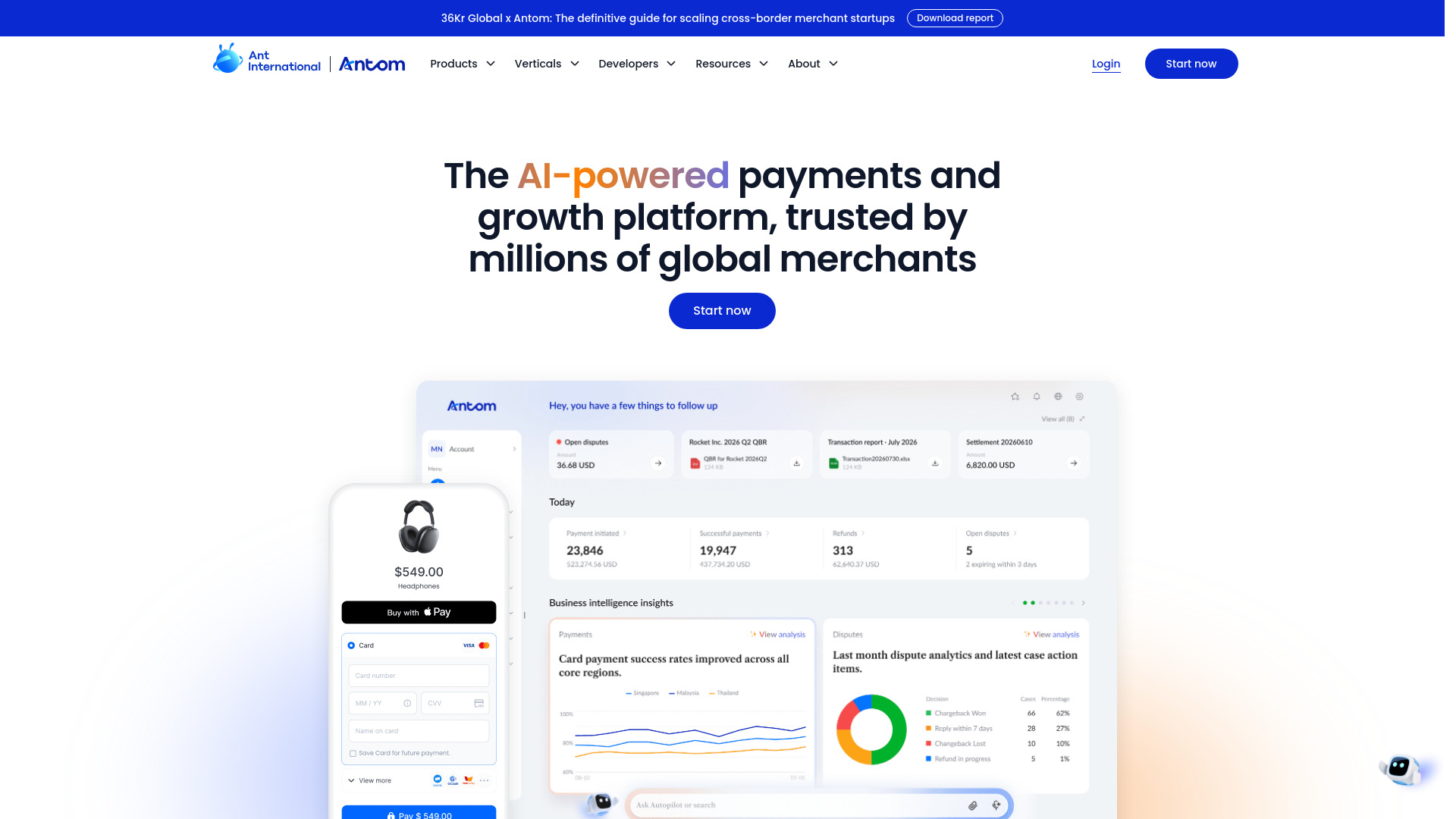
Antom earns the top position because it describes a complete recurring-revenue workflow: businesses can create subscriptions, set flexible pricing, and automate changes throughout a customer's lifecycle. That can matter to a retail or commerce business with subscription products or recurring services. But this is an operational and payment-management fit, not a retail surveillance or cyber-defense product. Its large traffic signal supports its visibility, not a claim that it detects security threats.
Why it is top-ranked
| Scoring dimension | Assessment | Rationale |
|---|---|---|
| Feature depth | 24/25 | Covers subscription setup, flexible billing models, renewals, and account changes. |
| Audience fit | 21/25 | Strong for recurring-revenue businesses; narrower for general retail security. |
| Practical usability | 22/25 | Automation and customer self-service can reduce manual subscription work. |
| Market signal | 23/25 | 1.8M monthly visits, the largest signal among these featured tools. |
Best fit
SaaS or commerce businesses that sell subscriptions and need to automate billing lifecycle events.
Teams that want flat-rate, per-user, tiered, or usage-based subscription models.
Operators seeking customer self-service for subscription changes.
Limitations
It does not describe store surveillance, loss prevention, endpoint defense, or fraud detection capabilities.
Subscription-management pricing is not clearly disclosed here; confirm the commercial terms directly.
A broad commerce operation without recurring billing may find the main workflow irrelevant.
Shortlist Antom if: Recurring billing is a meaningful operational risk or workload for your business, and you are not mistaking it for a dedicated security platform.

- Ecommerce sellers researching products and markets
- Early access for product research and competitor monitoring
- Starts at Free trial: free
- Monthly visits: 48.2K
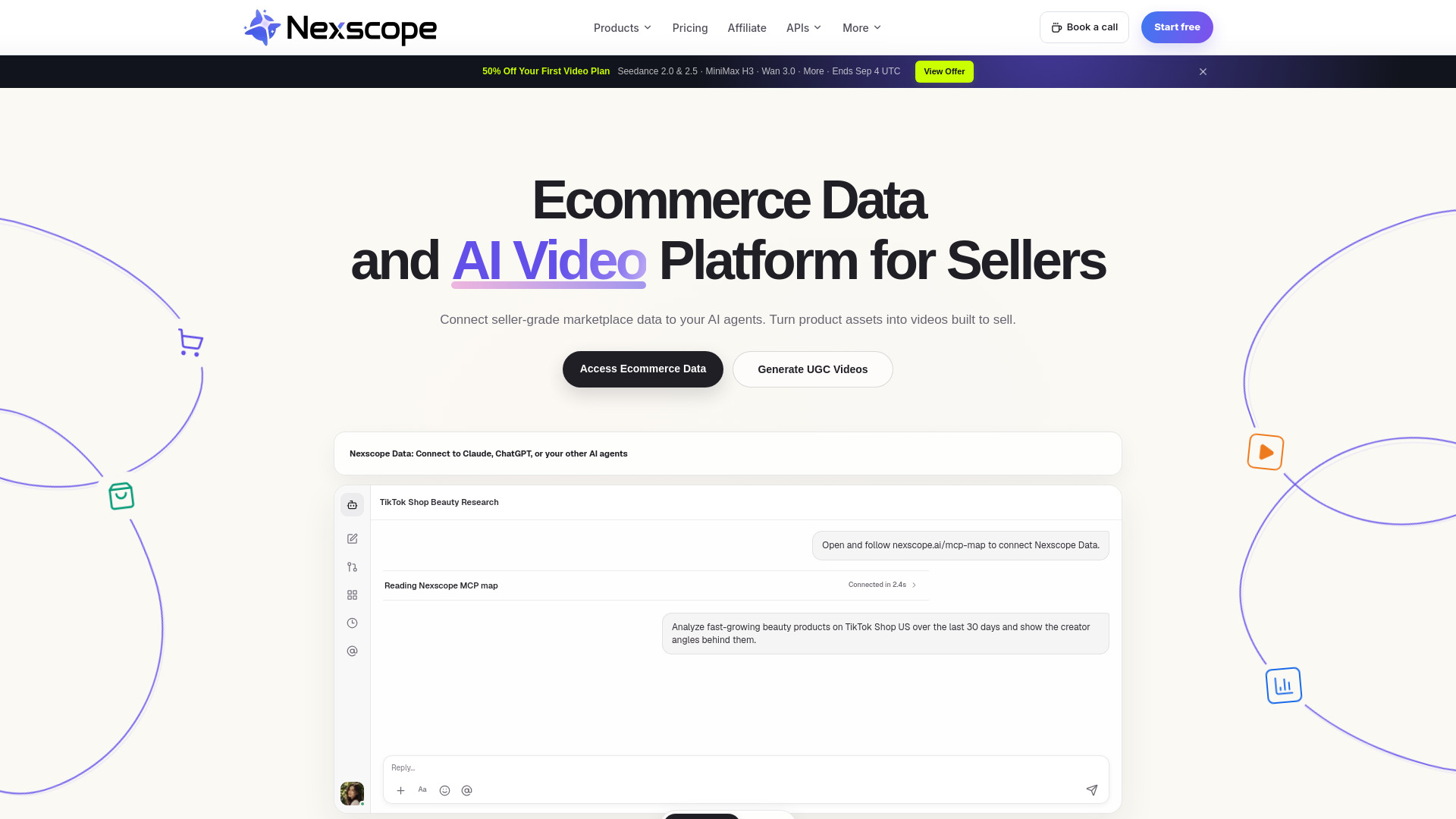
Nexscope is positioned around multi-platform ecommerce data, product research, and competitor monitoring. Those capabilities are useful for market awareness, but they are not security controls. Its score reflects a clear seller-research use case and a consolidated tool proposition; the main qualification is readiness. The product is described as coming soon or waitlist-stage, so do not plan a time-sensitive workflow around it until you verify that access is open and the features you need are available.
Why it is top-ranked
Multi-platform ecommerce data and product research give sellers a defined workflow to evaluate.
It aims to consolidate seller tools rather than focus on only one research task.
A waitlist-stage product carries meaningful availability risk despite its strong score.
Best fit
Ecommerce sellers comparing products, markets, or competing listings.
Teams willing to join a waitlist and evaluate the product when access becomes available.
Operators looking for research tools, rather than store or network security controls.
Limitations
It is currently described as coming soon or waitlist-stage.
The listed capabilities are ecommerce intelligence, not threat detection or loss prevention.
Verify the trial terms and product availability before counting on it.
Shortlist Nexscope if: Product and competitor research is your actual need and you can wait to confirm launch access.

- Developers automating ecommerce operations
- Automated search, purchasing, shipment tracking, and returns
- Starts at $1 per successful order
- Monthly visits: 8.7K
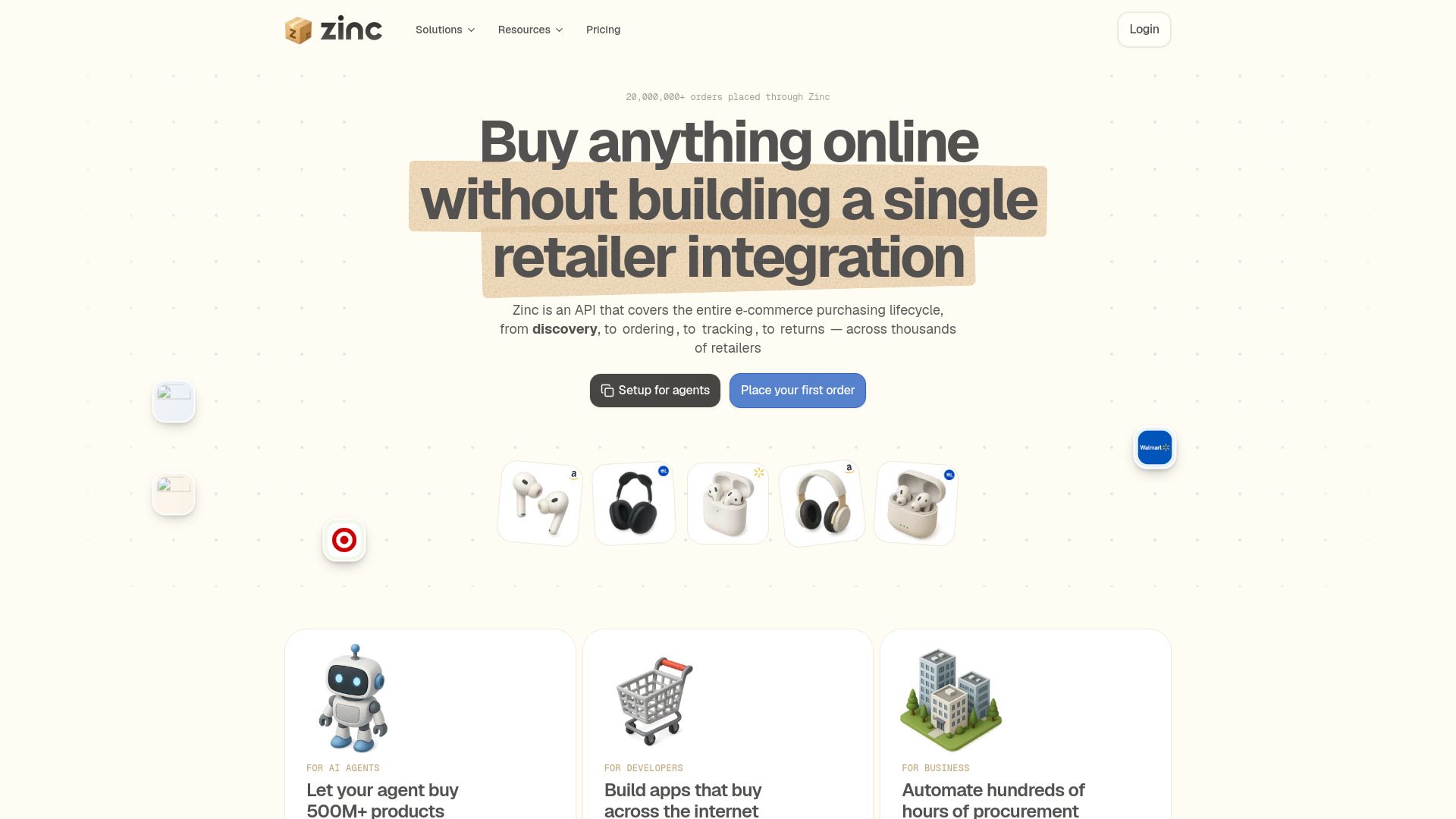
Zinc stands out for developers who want to connect product discovery and purchasing to downstream order tasks. Its API covers search across major online retailers, checkout and order placement, shipment tracking, and returns. That is a practical automation surface for commerce workflows, but it also makes cost modeling important: charges apply per successful order and per API call. Treat it as an integration component, not a security monitoring system.
Why it is top-ranked
It brings product search and purchasing together with tracking and returns in one API.
The capabilities are concrete and useful for programmatic commerce workflows.
The score is tempered by variable usage costs and a narrower developer-oriented audience.
Best fit
Ecommerce developers building automated product search or purchasing workflows.
Teams that need order tracking and returns automation alongside checkout.
Businesses comfortable monitoring API and per-order costs.
Limitations
Costs can accumulate per successful order and per API call.
Its API-based commerce workflow is not a substitute for fraud prevention or security monitoring.
Teams without developer capacity may not be a natural fit.
Shortlist Zinc if: You need to automate commerce operations through an API and can forecast usage-based costs.

- Small business owners managing online reviews
- 7-day trial with 1,000 free credits
- Starts at $10/location/month, pay as you go
- Monthly visits: 12.0K
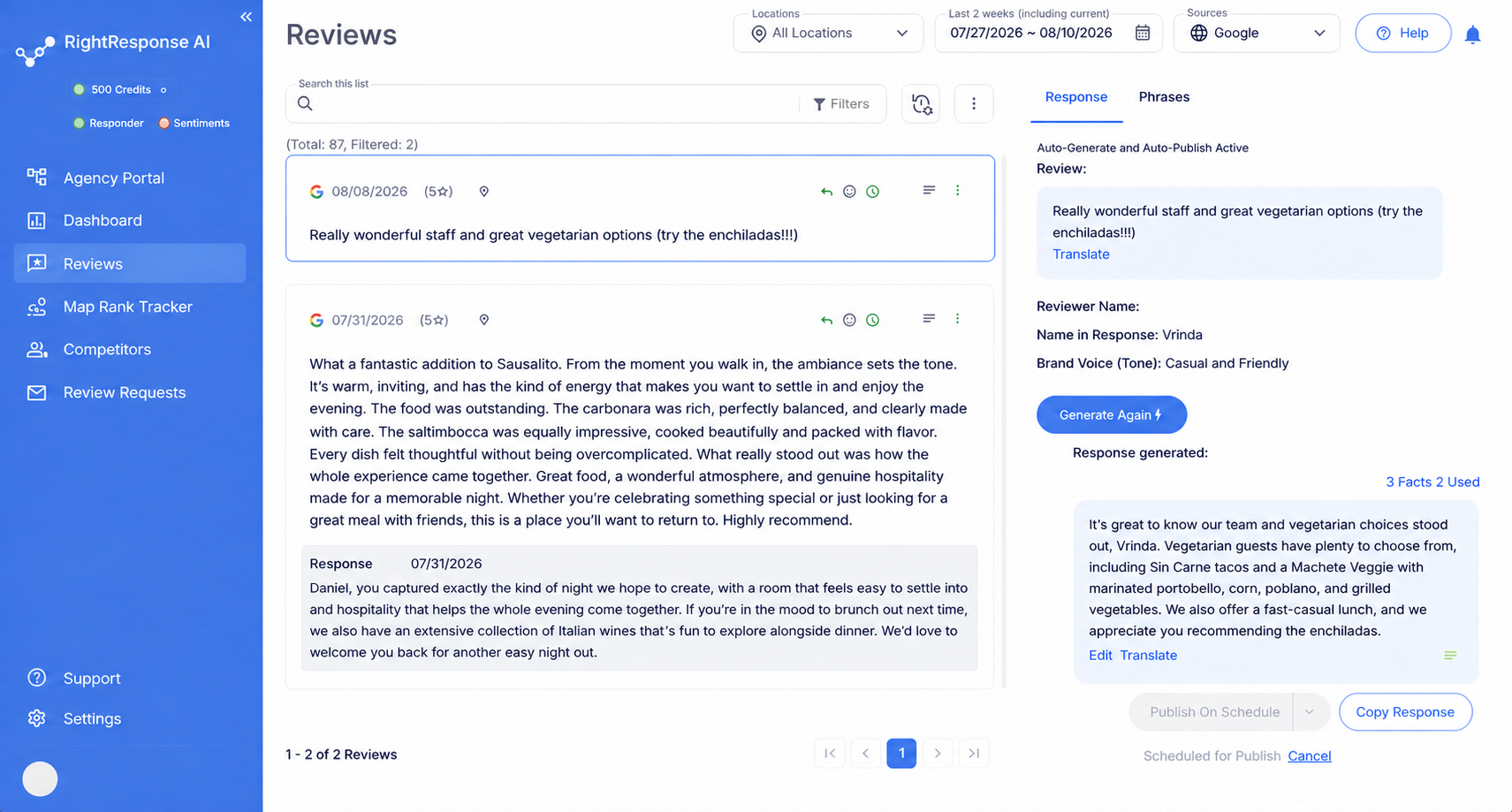
Review response is RightResponse AI's center of gravity. It combines a multi-agent workflow with response generation and publishing, and its listed trial gives prospective users a concrete way to evaluate the experience. For a retailer, that may help with reputation operations across locations. Do not confuse review sentiment analysis or local rank tracking with security analytics: the product is oriented toward customer feedback and visibility, not incident detection.
Best fit
Small businesses that need help drafting and publishing review responses.
Multi-location operators interested in review sentiment and local ranking workflows.
Teams that prefer trying a short trial before scaling usage.
Limitations
Usage-based pricing can make monthly spend variable; monitor credits and location costs.
Its review and reputation features do not establish protection against theft or cyber threats.
Businesses with low review volume may not need an automated response workflow.
Shortlist RightResponse AI if: Review handling is a real workload and you want to test an AI-assisted workflow before committing.

- Sales leaders coaching teams
- AI sales coaching, onboarding, and sales coaching features
- Starts at Check vendor pricing
- Monthly visits: 213
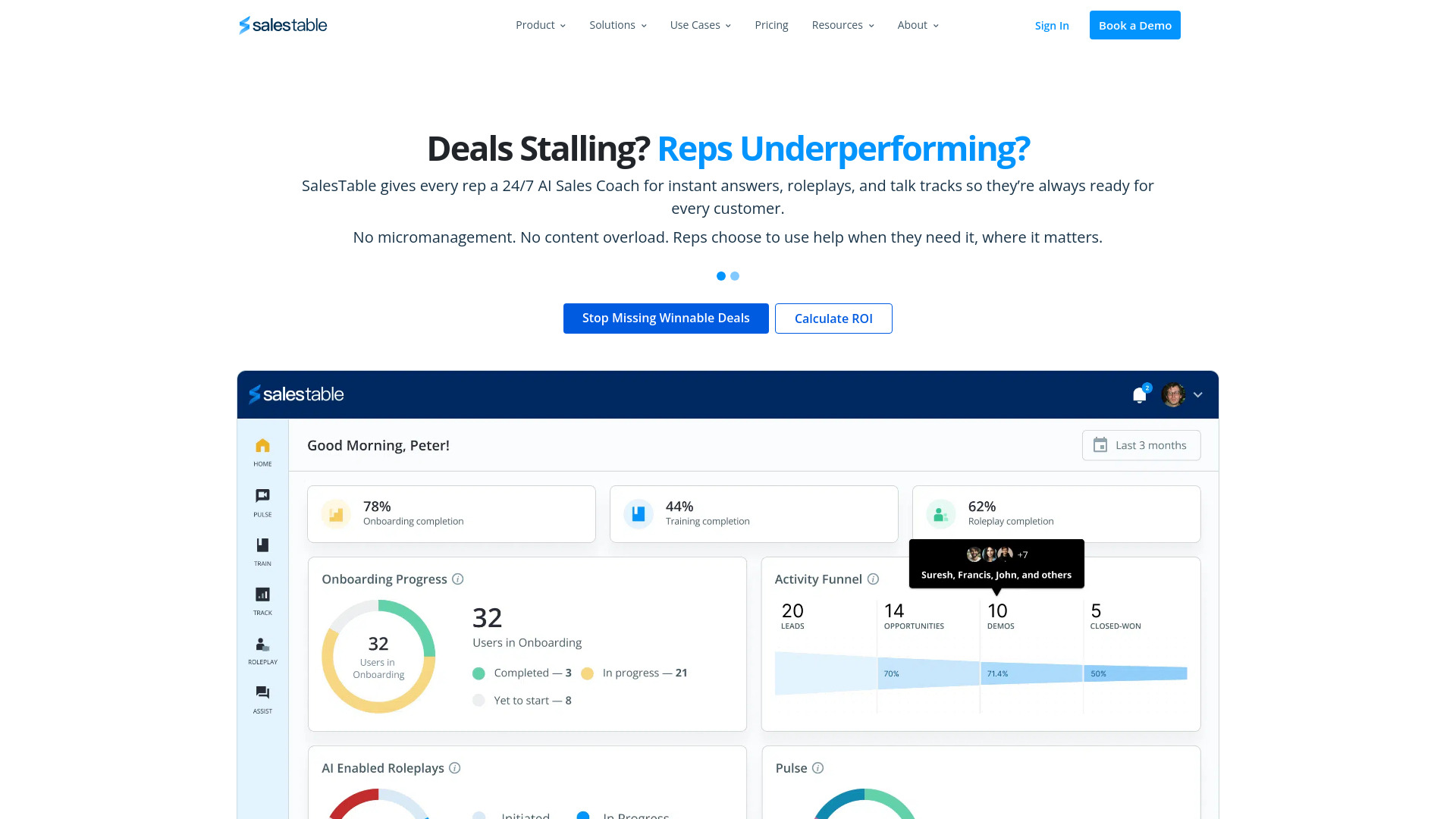
SalesTable AI takes a people-and-process angle: it offers AI sales coaching, sales-manager guidance, and onboarding support. That can be relevant to retail sales organizations that need consistent employee guidance, but it is not a conventional security tool. Its low listed monthly-visit signal and sales-led pricing make a hands-on product and procurement check especially important before a retailer builds a team workflow around it.
Best fit
Sales leaders looking for AI-supported coaching and onboarding.
Teams that value on-demand guidance for sales employees.
Retail organizations evaluating enablement tools as part of broader operational consistency.
Limitations
Pricing is not transparent and requires contacting the vendor.
The described scope is sales enablement, not physical or digital security.
The available usage signal is low, so validate product maturity and support directly.
Shortlist SalesTable AI if: Your priority is sales-team coaching and you are comfortable requesting a quote and validating the product firsthand.

- Ecommerce sellers preparing product images
- Free single-image removal, no login required
- Starts at Free for a single image
- Monthly visits: Not listed
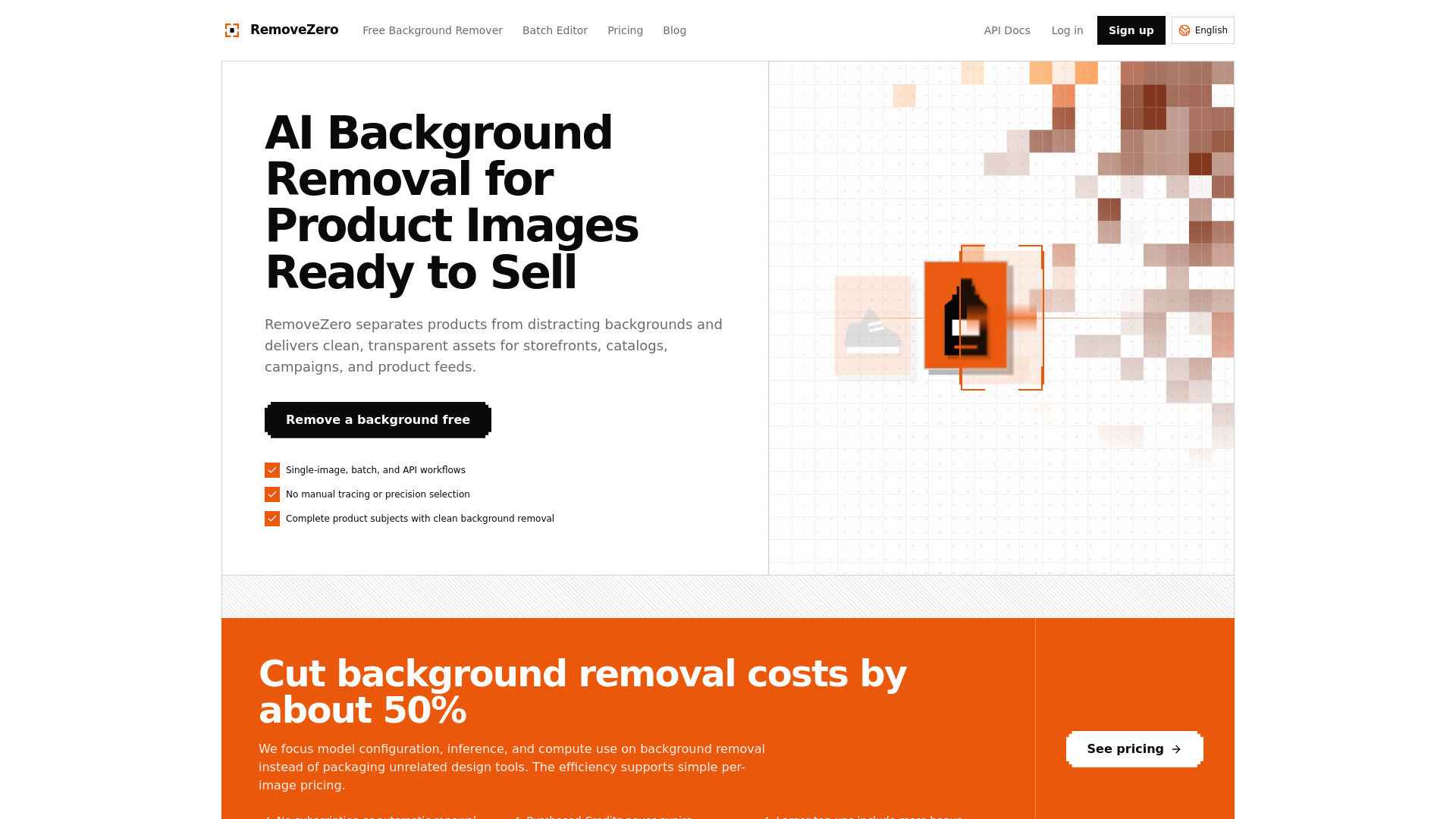
RemoveZero solves one specific ecommerce task: removing a product-image background. The free single-image workflow requires no login, subscription, or credits, which makes it easy to test without introducing much friction. Batch processing and API use are paid, though, so the simple free experience should not be mistaken for an unlimited production pipeline. It is an image-preparation tool, not a retail security solution in the usual sense.
Best fit
Sellers who need to clean up an occasional product image.
Teams that want to test background removal without creating an account.
Ecommerce operators preparing transparent or commerce-ready product visuals.
Limitations
Batch processing and API usage are paid.
A one-image utility does not address security, access control, or fraud risks.
No usage signal is listed to help assess adoption at scale.
Shortlist RemoveZero if: You need a quick, free way to remove backgrounds from individual product photos, not a security platform.

- Fashion brands producing ecommerce imagery
- 600 welcome credits
- Starts at Check vendor pricing
- Monthly visits: Not listed
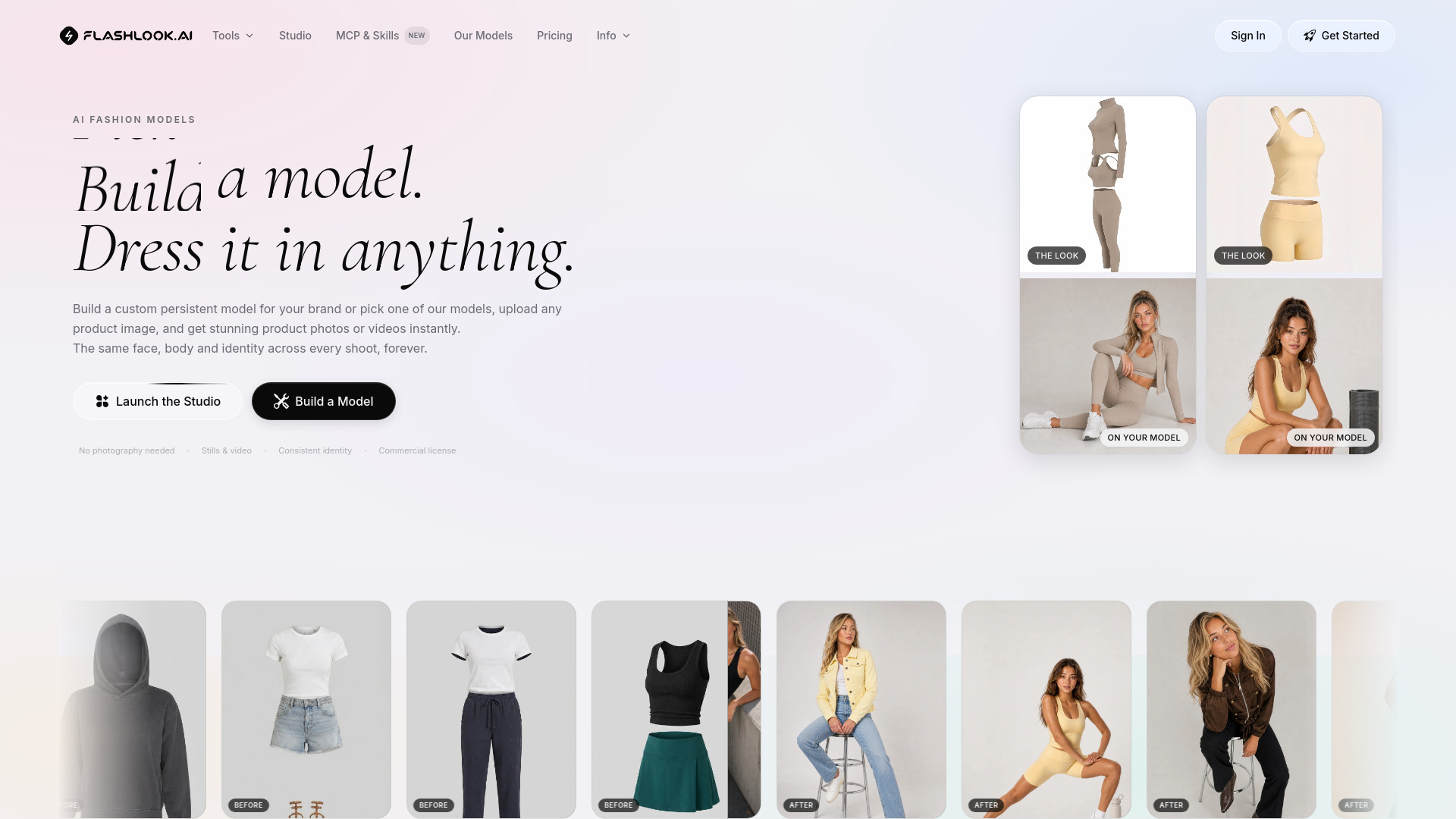
Flashlook AI is built for fashion ecommerce imagery rather than security. Its distinctive angle is persistence: brands can use a consistent AI fashion model across repeated product shoots, then generate on-model stills and short video clips from product photos. The 600 welcome credits offer an initial way to explore the workflow, but generated assets consume credits, including video. Budget for ongoing production before treating the tool as a repeatable catalog pipeline.
Best fit
Fashion brands that want a consistent virtual model across product imagery.
Ecommerce teams generating on-model catalog stills or short clips.
Sellers interested in a custom model-building workflow.
Limitations
Generated content consumes credits, including video clips.
Pricing is not clear enough here to estimate ongoing production costs.
Visual content generation does not protect stores, accounts, or payment systems.
Shortlist Flashlook AI if: Consistent fashion product imagery is your goal and you are prepared to track credit consumption.
Which retail security solutions should you try first?
For a direct security need, first define whether the risk is physical, digital, financial, or operational, then shortlist vendors built to control that risk. None of the seven ranked tools is presented as a dedicated retail security platform. That distinction matters more than the leaderboard order.
For adjacent commerce work, start with Antom for subscription operations, Zinc for API-driven ordering, or RightResponse AI for review workflows. Choose Nexscope only after confirming that it is available; use RemoveZero and Flashlook AI when the need is product imagery rather than security.
What to test before choosing
Ask each vendor to demonstrate the exact workflow you plan to use, including relevant data inputs, user permissions, outputs, and failure handling. For security-specific purchases, also verify coverage, alerting, auditability, integrations, and the vendor's approach to protecting your data; do not assume these capabilities from a general AI or ecommerce feature list.
Run a small pilot with realistic store or ecommerce scenarios and calculate total cost at expected usage. Confirm trial limits, paid overages, order or API fees, credit consumption, availability, and any sales-led pricing in writing before rollout.
Common mistakes when choosing retail security solutions
Treating adjacent software as a security control. Review management, image creation, sales coaching, and billing automation may support a retailer, but they do not demonstrate loss prevention or cybersecurity coverage.
Choosing a tool before defining the risk. Store theft, payment fraud, account compromise, and operational errors require different controls and proof.
Ranking by score alone. The scores compare the listed tools; they do not certify security effectiveness or replace a requirements review.
Ignoring availability and variable costs. A waitlist, per-order charge, API fee, or credit-based workflow can change whether a tool is practical.
Skipping a real-world test. Validate the precise workflow, integrations, permissions, and performance your team will depend on.
FAQ
No. The list contains tools for subscription management, ecommerce research and automation, review workflows, sales coaching, and product imagery. They are adjacent to retail operations, not a confirmed lineup of physical security or cybersecurity products.